
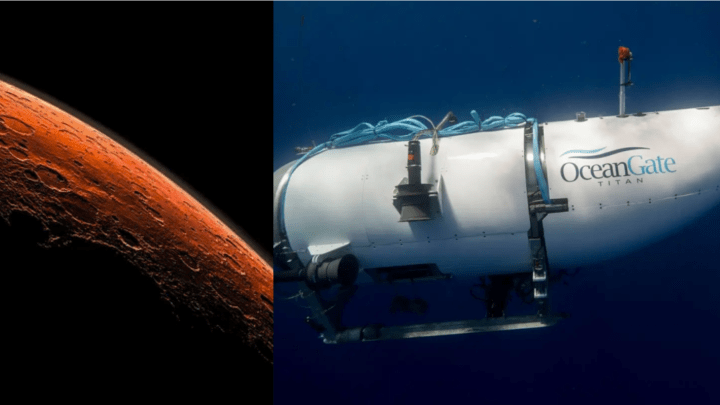
The co-founder of OceanGate is embarking on an ambitious venture, aiming to send 1000 people to Venus, the least hospitable planet in the galaxy, despite the recent bad press surrounding the company’s ill-fated Titanic submersible trip in June, which tragically claimed the lives of five people.
While the doomed submersible incident led to the loss of lives, including the co-founder Stockton Rush, Guillermo Söhnlein, his colleague, remains undeterred and now has his sights set on space exploration. He revealed his audacious plan to establish a human settlement on Venus by 2050, envisioning a community of 1000 individuals on the planet’s surface.
Söhnlein, an American businessman originally from Argentina, acknowledged the incredulity surrounding the idea, even among space industry professionals. Comparing his vision to Elon Musk’s ambitions for Mars, he acknowledged the skepticism his proposal might evoke, given Venus’s extreme conditions.
The scorching planet, known for being the hottest in the solar system, boasts an atmosphere composed of greenhouse gases, and its clouds are laden with sulphuric acid, resulting in temperatures that soar to a searing 475°C. These formidable challenges make Venus an unlikely candidate for human colonization at this juncture.
Nonetheless, Söhnlein maintains his belief that a floating space station could potentially withstand the harsh conditions on Venus, presenting a chance for human settlement in the future. While his project, Humans2Venus, has garnered attention, it will undoubtedly face considerable scrutiny and doubt, given the immense obstacles posed by the planet’s hostile environment.
Despite the odds, Söhnlein is determined to push forward with his vision. He has co-founded Humans2Venus alongside researcher Khalid Al-Ali, aiming to develop cutting-edge technologies that could reduce launch costs and fund space projects without relying on government financing.
As ambitious as Söhnlein’s aspirations may be, they undoubtedly underscore humanity’s fascination with space exploration and the drive to become a multi-planet species. With pioneers like Elon Musk paving the way for interplanetary travel, space enthusiasts remain hopeful that innovative technologies and scientific breakthroughs will open up new frontiers in the cosmos, making seemingly impossible ventures like living on Venus a possibility in the distant future. However, for now, the challenges of Venus’s inhospitable environment will necessitate meticulous planning and technological advancements before such an audacious dream can be realized.


