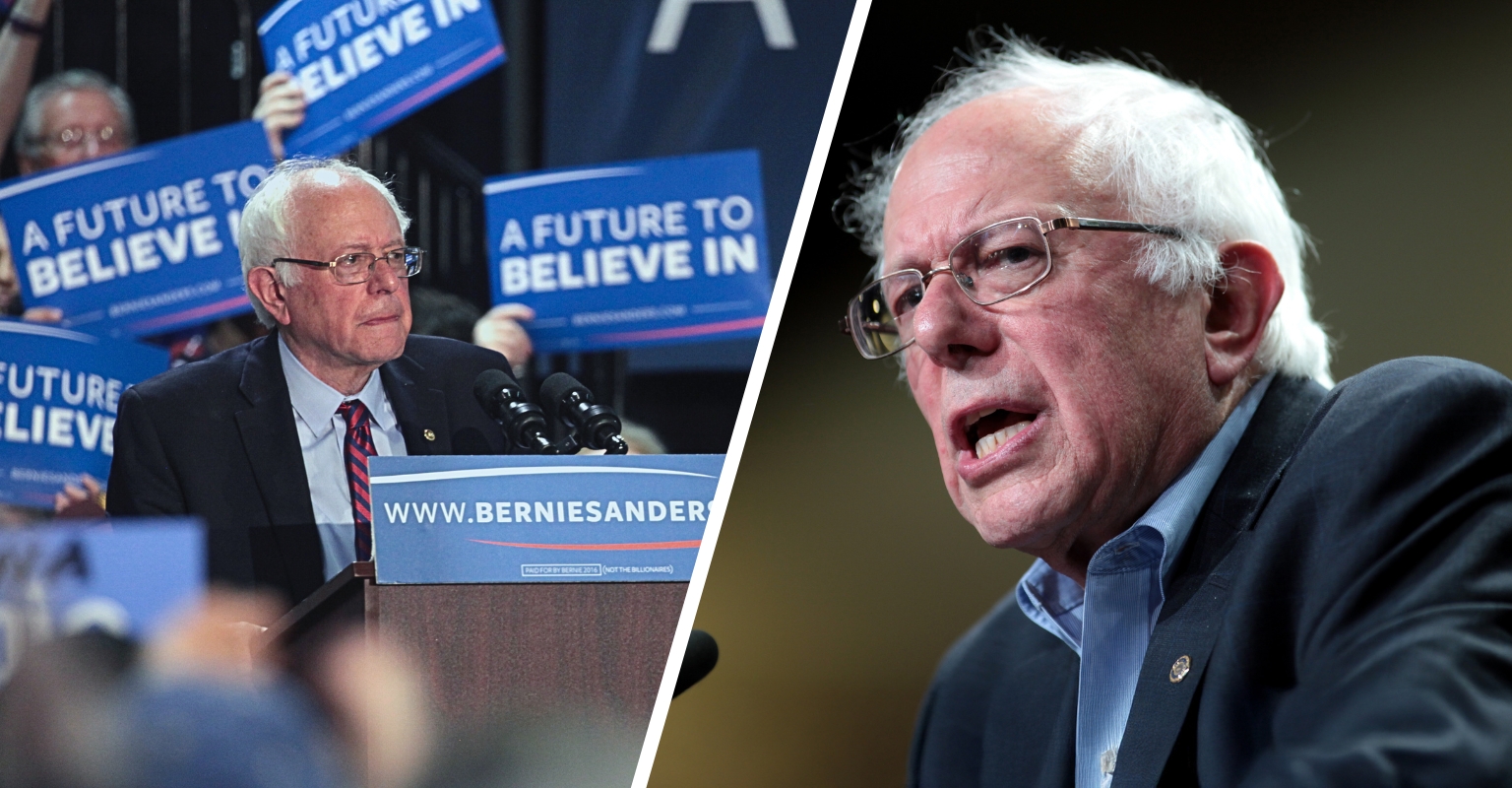
As artificial intelligence continues reshaping workplaces and boosting productivity, Senator Bernie Sanders believes the United States must rethink the traditional workweek.
During a recent appearance on the Joe Rogan Experience, Sanders argued that rising efficiency through AI should benefit workers instead of replacing them.
“You’re a worker, your productivity is increasing because we give you AI,” he said.
“Instead of throwing you out on the street, I’m going to reduce your workweek to 32 hours.”
Sanders has already proposed legislation to make that shift a reality. Last year, he introduced the Thirty-Two Hour Workweek Act, which would require overtime pay beyond 32 hours each week.
The goal is simple: allow workers more free time rather than forcing them to work as hard as before. “Let’s use technology to benefit workers,” Sanders told Rogan.

“That means more time with your family, friends, education, whatever you want. You don’t have to work 40 hours anymore.”
A shorter workweek remains controversial, especially in industries already disrupted by automation and AI. But Sanders’ plan would phase in changes over four years, giving businesses time to adjust.
He believes Americans deserve more balance as machines take over the most demanding tasks.
Sanders Warns AI Could Also Create Dangerous Consequences
Sanders said the conversation cannot stop at productivity alone. He told NBC News that AI also presents serious risks if governments use it without restraint.
“I think we are not all that far away from the development of robotic soldiers,” he said, voicing fears about future warfare.
Human casualties have traditionally acted as a moral barrier when leaders decide to enter conflicts. Sanders worries that disappears if soldiers become robots.
“If you don’t have to worry about loss of life, and what you worry about is loss of robots, what does that mean?” he asked. Removing human stakes, he argued, could drastically increase global conflict.
He also warned that AI threatens to worsen an already extreme wealth divide. Today, before AI fully takes over industries, “the top one percent own more wealth than the bottom 93 percent,” Sanders said.
Tech billionaires such as Elon Musk, Jeff Bezos, and Mark Zuckerberg are pouring money into AI development, and Sanders fears the benefits will stay at the top.
“It will mean even more wealth and political power for these guys,” he said.
He warned that weakening democracy becomes a real possibility if working people see their livelihoods decline while billionaire influence surges.
Future Jobs and the Reality of a Post-Work Society
Sanders also responded to warnings from tech leaders that AI could eventually replace almost every job. Musk has suggested that work may soon be “optional,” because AI and robots will handle everything.
Sanders questioned what that truly means for society. “If it’s going to replace all jobs, what does that mean?” he asked.
Millions of people rely on employment not only for income, but also purpose and community.
Sanders said Congress has barely begun discussing how the nation will adapt if AI disrupts entire industries.
“There has been far, far, far too little discussion among the American people, in the media and certainly in Congress,” he said.
He argued that lawmakers must respond now, creating protections and updated systems before automation leaves millions behind.
The senator believes that new technology will continue advancing rapidly, so the country cannot afford to ignore the consequences.
Featured image credit: Gage Skidmore