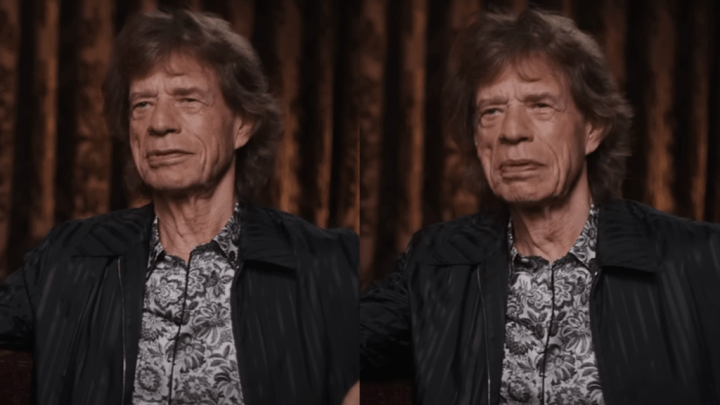
Mick Jagger, the iconic frontman of The Rolling Stones, has raised the intriguing possibility of directing the band’s post-1971 catalogue towards charitable causes rather than bequeathing it to his offspring, who he believes do not require the vast wealth it entails.
In a recent interview with the Wall Street Journal, Jagger disclosed his intentions regarding the band’s musical legacy. He expressed no inclination to sell the post-1971 catalogue and instead contemplated the notion of contributing it to charitable endeavors, stating, “The children don’t need $500m to live well. Come on.” This bold statement underscores his desire to utilize the band’s extensive musical repertoire for the greater good of society. “You maybe do some good in the world,” he suggested, alluding to the transformative potential of such an act.
Mick Jagger is a father to eight children, each with their unique journey and circumstances. His eldest daughter, Karis, born in 1970 to actress Martha Hunt, is now 52. Subsequently, his second daughter, Jade, was born in 1971 during his marriage to Bianca Jagger, making her 51 years old today. The following years saw the arrival of four children with model Jerry Hall: Elizabeth, 39, Georgia May, 31, James, 38, and Gabriel, 25. In 1999, he welcomed his son Lucas, 24, with model Luciana Gimenez Morad. Mick’s youngest child, Deveraux, at six years old, was born to choreographer and former ballerina Melanie Hamrick.
Beyond his family’s financial well-being, Jagger recognized the broader context of ownership within the music industry. He noted that the Stones do not possess the copyright to some of their most significant hits, drawing parallels with the struggles of artists like Taylor Swift in her disputes with record labels over early music. He commented, “The industry was so nascent, it didn’t have the support and the amount of people that are on tap to be able to advise you as they do now.” He acknowledged the challenges that artists continue to face, citing Taylor Swift’s public dissatisfaction with her music ownership as a prominent example.
Intriguingly, Jagger also touched upon the potential for The Rolling Stones to embark on a posthumous hologram tour. Reflecting on technological advancements, he mused, “You can have a posthumous business now, can’t you? You can have a posthumous tour.” He referenced the progress in holographic performance technology, mentioning the ABBA hologram event he had missed. This intriguing idea hints at the enduring legacy of The Rolling Stones and their willingness to adapt to new frontiers in music and performance.
In a recent announcement that thrilled fans worldwide, The Rolling Stones unveiled their 24th studio album, ‘Hackney Diamonds,’ featuring the lead single ‘Angry.’ This record marks their first collection of original music in 18 years, following 2005’s ‘A Bigger Bang.’ The album boasts collaborations with musical luminaries such as Paul McCartney, Lady Gaga, Elton John, and Stevie Wonder, showcasing the enduring appeal of the legendary rock band.
Remarkably, ‘Hackney Diamonds’ will also preserve the legacy of the band’s late drummer, Charlie Watts, with his drum parts featured on the album. Founding member Bill Wyman will contribute bass parts, adding a poignant dimension to this musical tribute. Furthermore, a documentary film linked to the album is in the works, produced by Fulwell 73, the team renowned for their work with The Kardashians.
Meanwhile, Keith Richards, the band’s legendary guitarist, shared his reflections on health and lifestyle changes. He candidly revealed that he is “trying to enjoy going straight” now that he has ceased smoking and abstained from drugs. He described this as a unique experience, marking a significant departure from his storied rock ‘n’ roll lifestyle. These changes underline the evolving narratives of The Rolling Stones as they continue to leave an indelible mark on music history.