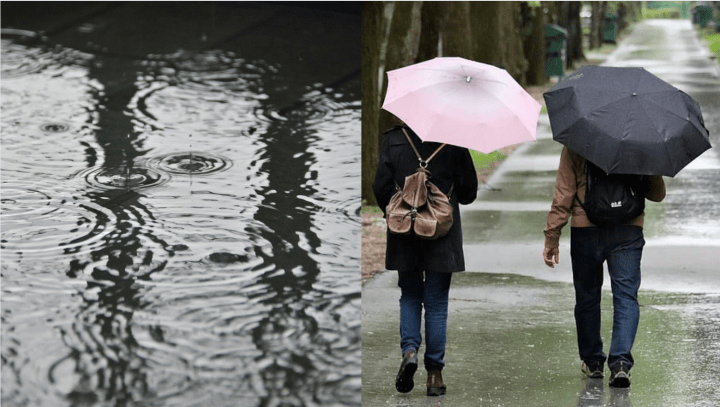
Scientists have confirmed that there are some people that are able to smell when it’s about to rain.
The invigorating scent that fills the air after rainfall is a familiar and cherished experience for many.
This fragrance is particularly potent when rain follows a prolonged period of sunshine, reminiscent of the April showers.
However, it appears that some individuals possess an extraordinary ability to detect this distinct aroma even before the rain arrives—a useful trick for avoiding getting caught in a downpour.
Can these claims be substantiated by scientific evidence, or are they merely superstitions?
While most people acknowledge the post-rain smell, skepticism abounds regarding the possibility of smelling rain in advance. Interestingly, there is a term for the delightful fragrance that lingers after heavy rain, known as “petrichor.”
The word “petrichor” originates from Greek, combining “petros,” meaning stone (as in “petrify”), and “ichor,” the mythical fluid flowing through the veins of Greek gods. Mineralogists Isabel Joy Bear and Richard Thomas coined the term in 1964. The distinct scent is produced by soil bacteria that release a chemical called “geosmin.”
Remarkably, humans possess an exceptional ability to detect geosmin, surpassing even the olfactory prowess of sharks in detecting blood—a testament to our remarkable senses. But what makes the smell of petrichor so appealing? The answer lies in the bacteria’s intentional production of the scent to attract organisms into the soil, facilitating the dispersion of the bacteria to other locations.
The prevalence of the petrichor smell following rainfall can be attributed to a fascinating phenomenon. When raindrops strike the ground and spread out, they can trap pockets of air. These air pockets then rise to the surface like tiny aerosols, carrying along with them any chemicals and microorganisms present in the soil.
In addition to petrichor, another olfactory element may influence our perception—the chemical compound ozone. Ozone possesses a distinct aroma, sweeter than that of petrichor, and can serve as a precursor to an impending storm. Winds accompanying the approaching storm push pockets of ozone gas to ground level, aligning with the level at which our nostrils are most likely to detect them.
Thus, it appears that the claim of some individuals being able to smell the approaching rain holds some truth after all—an extraordinary ability indeed!
As we continue to unravel the mysteries of the natural world, we uncover fascinating insights into our senses and their interactions with the environment. The phenomenon of smelling rain before it arrives adds another intriguing dimension to our understanding of our olfactory capabilities.