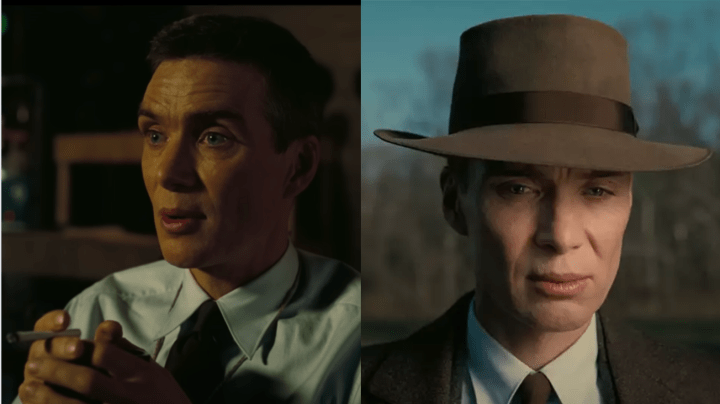
Oppenheimer fans have noticed what they believe to be a historical error in the movie, and director Christopher Nolan might be feeling a bit regretful once he learns about it. As cinemagoers have finally had the chance to see Cillian Murphy shine as theoretical physicist J. Robert Oppenheimer in the film, they discovered a small mistake that caught their attention.
The three-hour biographical drama marks Nolan’s first foray into this genre and boasts an impressive cast, including Robert Downey Jr., Matt Damon, and Emily Blunt. From the very start, Oppenheimer has generated a buzz, with projections of a $50 million opening weekend being blown away as it’s set to amass $75 million. The film has also been well-received on Rotten Tomatoes, currently holding a 94 percent approval rating.
Critics have been praising the movie for its outstanding performances, brilliant acting, and masterful filmmaking techniques. However, among the positive reviews, some eagle-eyed viewers have noticed a tiny error in a particular scene.
A fan named Andy Craig took to Twitter and shared a screenshot of a scene featuring Murphy’s character amidst an applauding audience, waving the American flag. However, upon closer examination, it becomes apparent that the flag displayed has 50 stars, which is historically inaccurate for the setting.
As the film is set in 1945, the correct version of the flag should have had 48 stars during the Truman Administration (1945-1953). The 48-star flag is the one that represented the United States during World War II.
Andy tweeted about the discrepancy, saying, “It was good and all, but I’ll be that guy and complain they used 50-star flags in a scene set in 1945.” This observation led to discussions among fans, with some speculating that the choice of the 50-star flag might have been intentional, as the colored scenes in the film represent Oppenheimer’s perspective, while the black and white scenes are from another viewpoint.
Nolan himself explained the film’s unique structure to Total Film, saying, “I wrote the script in the first person, which I’d never done before. I don’t know if anyone has ever done that, or if that’s a thing people do or not. The film is objective and subjective.”
He clarified that the color scenes are subjective, written from the first-person perspective, while the black-and-white scenes are objective. For actors reading the script, this approach might have been challenging, given the different perspectives and tones of the scenes.
Despite the minor historical discrepancy, Oppenheimer continues to captivate audiences in theaters, offering an intriguing portrayal of one of history’s most significant figures.