Donald Trump’s executive order has changed half a century of American drug policy, but legal risks will still apply in some cases.
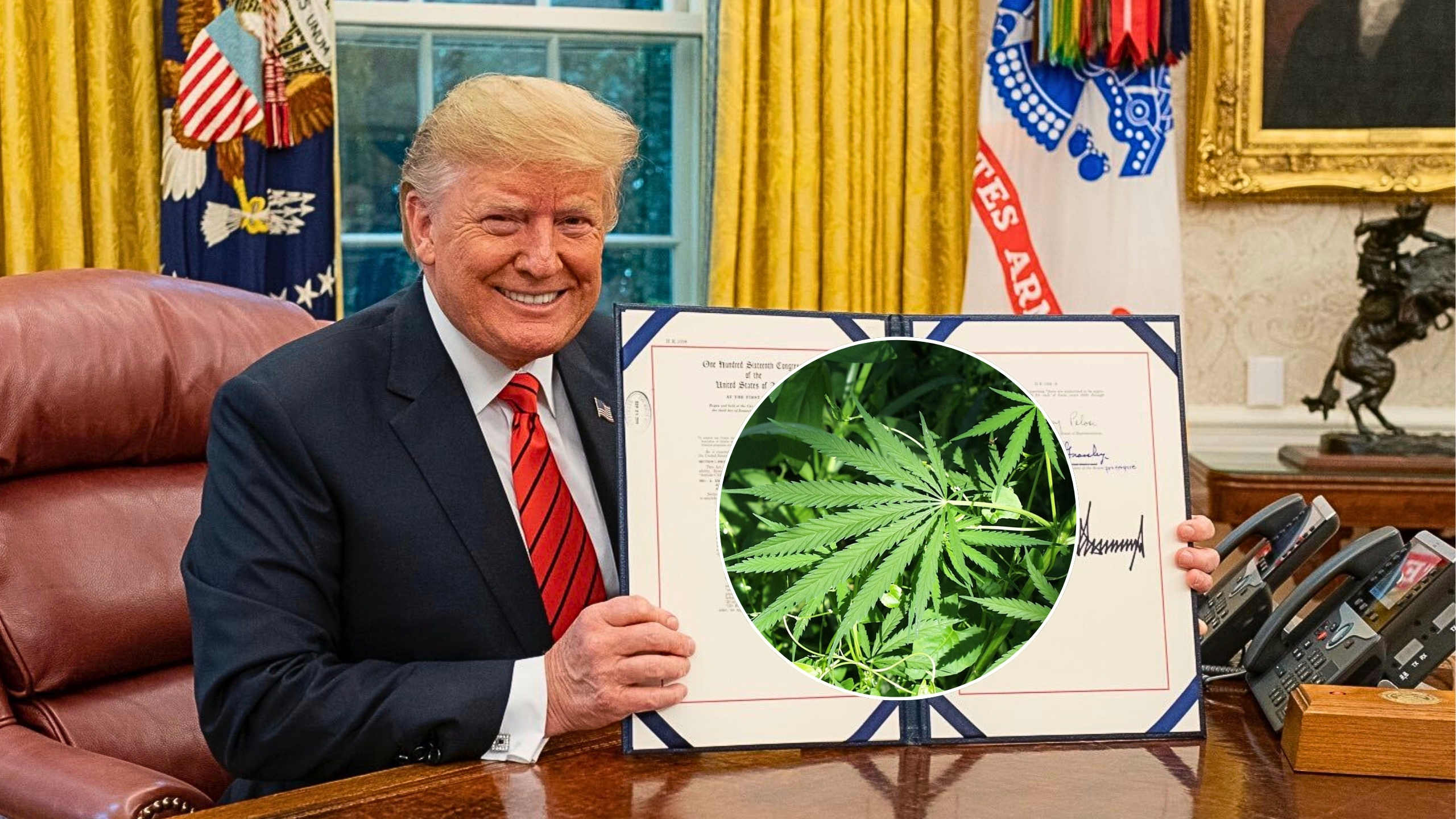
Donald Trump signed an executive order on Thursday that effectively ended more than 50 years of federal drug policy in the United States.
The president directed federal agencies to treat cannabis in the same legal category as common prescription medications such as Tylenol.
The change will see marijuana reclassified as a Schedule III substance, a significant shift from its existing Schedule I status.
Schedule I classification currently places cannabis alongside drugs such as cocaine and heroin under federal law.
“I’m pleased to announce that I will be signing an Executive Order to reschedule marijuana from a Schedule I to a Schedule III controlled substance with legitimate medical uses,” Trump said in the Oval Office.
He said the move marked the end of the war on weed that began 55 years ago under President Richard Nixon.
The executive order does not immediately reclassify marijuana but directs the Attorney General to act as quickly as possible.
It instructs the Justice Department and the Drug Enforcement Administration to complete the rescheduling process without unnecessary delay.

Despite recreational marijuana being legal in almost half of US states, the order does not legalize cannabis nationwide.
The change also does not override state laws or eliminate penalties in jurisdictions where marijuana remains illegal.
What does Trump’s marijuana law say?
President Trump’s executive order is titled “Increasing medical marijuana and cannabidiol research.”
The order opens by stating that Americans deserve access to the best medical treatments and research infrastructure available.
It highlights that chronic pain is a widespread issue affecting millions of people across the United States.
The order notes that many patients already rely on cannabis-derived products to help manage long-term pain conditions.
Federal policy since 1970 has classified cannabis as highly addictive and lacking any accepted medical use.
The order states that this approach has restricted scientific research into marijuana’s safety and effectiveness.
It says the policy has limited scientists and manufacturers from conducting research needed to guide doctors and patients.
The executive order explains that the change is necessary to speed up cannabis rescheduling after a Justice Department ruling in May 2024.
That ruling concluded marijuana should be reclassified but required hearings before the change could take effect.
Trump’s order is intended to remove the need for those hearings and accelerate the process.
The order also expands which cannabis-related substances are recognized as having potential medical uses.
It includes cannabidiol, tetrahydrocannabinol, and hemp-derived products within that definition.
The Attorney General is directed to update cannabis definitions to make CBD products easier to develop and sell.
The changes could also relax limits on allowable THC levels in CBD products under federal rules.
What’s the difference between Schedule I and Schedule III drugs?
Cannabis has been classified as a Schedule I substance since 1970 under US drug law.
Schedule I drugs are considered to have a high potential for abuse and no accepted medical use.
They are also regarded as lacking accepted safety standards for use under medical supervision.
Other Schedule I substances include cocaine, heroin, DMT, LSD, MDMA, magic mushrooms, and GHB.
Reclassifying cannabis as a Schedule III drug places it alongside substances such as Tylenol and ketamine.
Schedule III drugs are still regulated but are recognized as having legitimate medical and research uses.
The change does not make marijuana legal and does not remove restrictions on its possession or use.
Federal law will still regard cannabis as having a potential for abuse, but at a lower level.
The new classification accepts that marijuana may cause moderate or low physical dependence.
It also acknowledges the risk of high psychological dependence associated with its use.
Under the change, cannabis products may be prescribed by licensed medical practitioners.
Those prescriptions will need renewal every six months or after five refills, whichever comes first.
What will change under the new law?
Recreational marijuana use will remain illegal under federal law after the executive order takes effect.
The order does not change how law enforcement agencies handle marijuana-related arrests.
Trump said the change “in no way sanctions its use as a recreational drug.”
The reclassification is intended to make scientific research into cannabis benefits easier to conduct.
It may also improve profitability for businesses involved in developing regulated cannabis products.
The changes are expected to take time before they are fully implemented across federal agencies.
The order signals a significant shift in how the government views cannabis and its medical potential.
It could support future use of marijuana-based treatments for conditions such as anorexia and chemotherapy-related nausea.
Speaking to The Tennessean, State House Speaker Cameron Seton discussed the challenges ahead.
“There will have to be conversations about who manufactures it, who tests it, who distributes,” he said.
He added that questions remain about approved medical conditions, FDA involvement, and other regulatory requirements.
Featured image credit: The White House